Meta Description:
Discover if Experian Boost and UltraFICO actually raise your credit score, which lenders see the data, and what the 2026 mortgage rule changes mean for alternative data
Written by Credit Builder Guide Editorial Team
Credit Builder Guide is dedicated to helping Americans understand credit scores, improve financial habits, rebuild damaged credit, and make smarter borrowing decisions through simple, research-based educational content.
Fact-checked using trusted U.S. financial resources • Updated for 2026
The Bill You Already Pay That Nobody Sees
Imagine you have paid your electric bill, cell phone bill, and Netflix subscription on time every month for the past two years. You have never missed a rent payment. Yet when a lender pulls your credit report, none of that responsibility shows up. Your credit score is built entirely from credit cards, auto loans, and student debt—accounts you may not even have if you are young, an immigrant, or recovering from a financial setback.
This gap is what the credit industry calls the «credit invisible» problem. Approximately 26 million American adults have no credit history with the nationwide consumer reporting agencies, and another 19 million have histories that are too thin to generate a reliable score. For decades, the system ignored the bills people paid every day because those payments were not considered «credit.»
That is changing—slowly. Products like Experian Boost and UltraFICO promise to fold alternative data into your credit profile, potentially raising your score without you taking on new debt. Meanwhile, scoring models like VantageScore 4.0 and policy shifts at the Federal Housing Finance Agency (FHFA) are pushing alternative data into the mainstream, especially for mortgages.
But these tools are not magic. They do not work for every lender, every scoring model, or every borrower. Some come with privacy trade-offs. Others have been slow to gain traction. This article explains what alternative data can and cannot do for your credit score in 2026, who benefits most, and whether these services are worth your time.
What Is Experian Boost and How Does It Work?
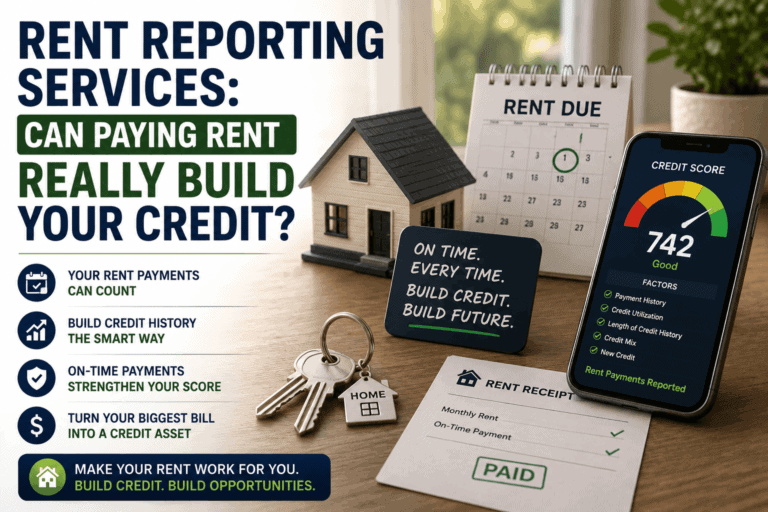
Experian Boost is a free feature offered by Experian that allows consumers to add eligible non-credit bill payments to their Experian credit file. The service scans your connected bank accounts or credit cards for recurring payments and identifies qualifying transactions such as utilities, mobile phone service, internet, streaming subscriptions, insurance premiums, and residential rent.
Here is how the process works:
- You create a free Experian account and opt in to Experian Boost.
- You securely link the checking or credit card accounts you use to pay monthly bills.
- Experian’s system scans up to 24 months of transaction history for eligible payments.
- You confirm which payments you want added to your Experian credit file.
- Experian recalculates your FICO Score 8 based on Experian data instantly.
Only positive payment history is added. If you missed a utility payment three months ago, Experian Boost ignores it. This asymmetry is intentional: the tool is designed to help, not punish.
According to Experian’s disclosures, users who receive a boost improve their FICO Score 8 from Experian by an average of 14 points. Among consumers with poor credit, the average improvement is closer to 22 points, and roughly 86% of users in that tier see some increase. For consumers with thin files—defined as four or fewer credit accounts—approximately 10% become scoreable for the first time after enrolling.
The service is free, you can disconnect at any time, and removing Boost reverses the score change.
What Is UltraFICO and Why Has It Struggled to Catch On?
UltraFICO is a different kind of tool. Developed by FICO in partnership with Experian and Finicity, it is not a credit-reporting add-on like Boost. Instead, it is an alternative scoring model that lenders can request when a borrower’s traditional FICO score falls short of approval thresholds.
When a lender offers UltraFICO, the borrower consents to link their checking, savings, or money market accounts. The model then evaluates:
- Average account balance and balance trends
- Length of time the accounts have been open
- Frequency of transactions
- Evidence of positive cash flow and avoidance of overdrafts
The goal is to give lenders a fuller picture of financial behavior beyond debt repayment. A borrower with a 590 traditional FICO score might demonstrate consistent savings and no overdrafts, prompting UltraFICO to generate a higher score that convinces the lender to approve the application.
However, UltraFICO has struggled to gain widespread adoption. Unlike Experian Boost, which any consumer can initiate, UltraFICO is triggered only by participating lenders at the point of application. As of 2026, relatively few lenders actively use it, and consumer awareness remains low. The service is free to consumers when offered, but its limited availability means it is not a reliable tool for most borrowers to count on.
What Counts as Alternative Data?
Alternative data refers to any financial information not traditionally found in a standard credit report. The major categories include:
| Category | Examples |
|---|---|
| Utility and telecom payments | Electricity, gas, water, mobile phone, internet, cable |
| Residential rent | Monthly rent payments to landlords or property managers |
| Streaming and subscriptions | Netflix, Hulu, Disney+, Spotify |
| Insurance premiums | Auto, renters, life (excluding health insurance) |
| Bank account behavior | Cash flow, savings patterns, overdraft history |
| Short-term lending attributes | Buy-now-pay-later patterns, payday loan history |
Experian Boost focuses primarily on the first four categories. UltraFICO focuses on bank account behavior. VantageScore 4.0, by contrast, is built to ingest many of these data types natively from the credit bureaus, meaning the scoring model itself is designed to reward alternative payment history when it appears in your file.
Who Benefits Most From These Tools?
Alternative data tools are not equally useful for everyone. The borrowers who see the most meaningful impact tend to share certain characteristics.
Thin-file consumers. If you have fewer than five credit accounts, your credit report contains limited information for scoring models to evaluate. Adding two years of on-time utility payments gives the algorithm more data points, which often translates to a higher score.
Credit-invisible individuals. If you have no credit score at all because you have never had a loan or credit card, Experian Boost may generate a score for the first time by adding reporting tradelines to your file.
Consumers rebuilding from past damage. A single collections account or a string of late payments from three years ago can anchor your score in the fair or poor range even if your current behavior is flawless. Alternative data does not erase old negatives, but it can dilute their impact by adding recent positive history.
Consumers with strong cash flow but low traditional scores. This is the target audience for UltraFICO. If your credit score is low because you have limited credit history but you maintain healthy bank balances, UltraFICO can signal that strength to a lender who chooses to use it.
If you already have a robust credit file with multiple cards, an auto loan, and a mortgage, Experian Boost may still add a few points, but the impact is usually marginal. One study found that only 2% of users with very good credit moved up to the exceptional tier using Boost.
The Hidden Limitations: What Lenders Actually See
The most important limitation of Experian Boost is also the most overlooked: it only affects your Experian credit file. It does not add data to Equifax or TransUnion, and it does not affect FICO scores calculated from those bureaus.
This matters because lenders do not all use Experian. Some pull Equifax. Some pull TransUnion. Many mortgage lenders, in particular, use a tri-merge report that combines all three bureaus and relies on the middle score. If your Experian score rises by 20 points but your TransUnion and Equifax scores stay the same, your mortgage qualification may not improve at all.
Experian explicitly acknowledges this limitation in its disclosures: «Most mortgage lenders do not consider credit scores impacted by Boost.» If you are applying for a conventional mortgage, the underwriter is likely looking at Classic FICO scores from all three bureaus, and the Boost data will not factor in.
Additionally, not all lenders use FICO Score 8. Auto lenders often use older FICO auto scoring models. Credit card issuers may use FICO Bankcard scores. None of these industry-specific models are guaranteed to incorporate Boost data, even if they pull Experian.
For UltraFICO, the limitation is availability. If your lender does not participate in the UltraFICO program, the tool is irrelevant to your application.
VantageScore 4.0 and the 2026 Mortgage Shift
While Experian Boost and UltraFICO are consumer-facing tools, the bigger story in 2026 is the movement of alternative data into mainstream mortgage lending through VantageScore 4.0.
In 2025, the Federal Housing Finance Agency (FHFA) approved VantageScore 4.0 as an acceptable scoring model for mortgages sold to Fannie Mae and Freddie Mac, ending the decades-long monopoly of Classic FICO in the mortgage industry. VantageScore 4.0 is designed to use trended data and alternative data—including rental payments, utility tradelines, and telecommunications history—to assess creditworthiness.
This is significant because VantageScore 4.0 can score approximately 33 million consumers who are currently unscorable under traditional models. Both Equifax and TransUnion began offering VantageScore 4.0 mortgage scores to lenders in 2025 and 2026 at prices significantly below FICO’s 2026 pricing, and the GSEs are actively encouraging adoption.
What this means for consumers is that alternative data is no longer confined to optional add-ons like Experian Boost. It is becoming embedded in the scoring infrastructure that determines whether you can buy a home. If your landlord reports your rent payments to the credit bureaus, or if your utility company reports your electric bill, that data may now influence your VantageScore 4.0—and by extension, your mortgage eligibility.
However, the transition is gradual. Lenders may choose which model to use, and many are expected to continue using Classic FICO alongside VantageScore during the interim phase. Do not assume that your alternative data will automatically help you qualify for a mortgage in 2026. The landscape is shifting, but it is not uniform yet.
Experian Boost vs. UltraFICO: Side-by-Side Comparison
| Feature | Experian Boost | UltraFICO |
|---|---|---|
| Cost | Free | Free (when offered by lender) |
| Who initiates | Consumer | Lender at point of application |
| Data source | Bank/credit card transaction history | Linked checking/savings accounts |
| What it evaluates | Payment history on bills | Cash flow, balance trends, overdraft history |
| Bureaus affected | Experian only | Experian only |
| Score models affected | FICO Score 8, VantageScore 3/4 | UltraFICO score (separate from traditional FICO) |
| Availability | Open to any consumer with qualifying bills | Limited to participating lenders |
| Impact on credit report | Adds tradelines to Experian file | No change to credit report; only affects score at application |
| Average score increase | ~14 points (varies widely) | Varies by cash flow profile |
| Best for | Thin files, credit invisibles, rebuilders | Consumers with strong banking habits but low traditional scores |
How to Set Up Experian Boost Safely
If you decide to try Experian Boost, follow these steps to protect your information and maximize your results:
Step 1: Create a free Experian account. You do not need a paid subscription. The free tier includes access to your Experian credit report, FICO Score 8, and the Boost feature.
Step 2: Link the right accounts. Connect the checking account or credit card you use to pay your monthly bills. If you split bills across multiple accounts, you may need to link more than one. Experian uses bank-level encryption, but you should only link accounts you are comfortable sharing.
Step 3: Review eligible payments carefully. Experian will surface qualifying payments. Confirm that each one is accurate and in your name. Bills paid by paper check, peer-to-peer apps like Venmo or Zelle, or cash are generally not eligible.
Step 4: Confirm additions one by one. You are not required to add every eligible bill. If a particular utility has spotty payment history, you can leave it out. Only the bills you confirm are added.
Step 5: Monitor your score and your report. After adding bills, check your updated FICO Score 8. Then review your Experian credit report to ensure the new tradelines appear correctly.
Step 6: Re-evaluate periodically. If you open new accounts or change bill payment methods, log back in to see if additional payments qualify.
Common Mistakes and Privacy Concerns
Assuming all lenders will see the boost. Many borrowers enroll in Experian Boost, see their score jump, and assume every lender from their auto dealer to their mortgage broker will see the same number. They will not. Always ask your lender which bureau and which scoring model they use.
Overestimating the impact for strong credit files. If you already have a 750 FICO score and ten open accounts, Experian Boost may add zero points. The tool is designed to help those with limited or damaged credit, not to polish an already strong profile.
Ignoring the privacy trade-off. Linking your bank accounts to a credit bureau gives that bureau visibility into your transaction history. Experian states it uses encryption and does not store login credentials, but any data sharing carries inherent risk. If you are uncomfortable with this level of access, alternative data tools may not be for you.
Forgetting that UltraFICO is lender-dependent. Some consumers sign up for UltraFICO directly on FICO’s website expecting their score to update permanently. UltraFICO does not work that way. It is a conditional score generated only when a participating lender requests it during an application.
Neglecting traditional credit building. Alternative data is a supplement, not a substitute. Even with Boost or UltraFICO, most lenders still prioritize traditional credit accounts. If you are serious about building credit, you still need a secured card, a credit builder loan, or another mainstream product in your file.
FAQ: Alternative Data and Credit Scores
Does Experian Boost affect my Equifax or TransUnion scores?
No. Experian Boost only adds data to your Experian credit file. It has no impact on your Equifax or TransUnion reports or scores. If a lender pulls one of the other bureaus, they will not see the Boost data.
Will Experian Boost help me get a mortgage?
Probably not directly. Experian’s own disclosures state that most mortgage lenders do not consider scores impacted by Boost. Mortgage underwriting typically relies on Classic FICO scores from all three bureaus. However, as VantageScore 4.0 gains acceptance in mortgage lending, alternative data may indirectly help if your rent or utility payments are reported through other channels and captured by that model.
Can Experian Boost hurt my credit score?
No. Experian Boost only reports positive payment history. Late or missed payments on eligible bills are ignored and cannot lower your score through Boost. If you disconnect Boost, the added data is removed and your score reverts to its previous level.
Is UltraFICO widely available?
No. As of 2026, UltraFICO remains limited to a small number of participating lenders. It is not something you can rely on at every bank or credit union. If a lender offers it during your application, it is worth considering. If not, it is not a tool you can force into the process.
Do rent payments count as alternative data?
Yes, but with caveats. Experian Boost can capture rent payments if they are paid online through a qualifying platform and appear in your linked bank account. However, rent paid by cash, check, or peer-to-peer apps is usually ineligible. VantageScore 4.0 is designed to incorporate rental tradelines more broadly if they are reported to the bureaus by your landlord or a rent-reporting service.
Are there paid alternatives to Experian Boost?
Yes. Services like eCredable Lift report utility and rent payments to TransUnion for a monthly fee of $9.95 to $14.95. Unlike Experian Boost, eCredable is not free, and it only affects your TransUnion file. Evaluate whether the cost is justified by the potential score improvement.
Conclusion
Alternative data is no longer a fringe concept in American credit scoring. Experian Boost has demonstrated that millions of consumers can raise their scores by adding everyday bill payments to their credit files, particularly those with thin or damaged credit histories. UltraFICO, while innovative, remains a niche product with limited lender adoption.
The more consequential development in 2026 is the integration of alternative data into mainstream scoring through VantageScore 4.0 and the FHFA’s authorization of that model for mortgage lending. For the first time, your rent, utility payments, and telecommunications history may influence your ability to qualify for a home loan—not through an opt-in app, but through the scoring model itself.
That said, alternative data tools are supplements, not replacements for traditional credit building. A 14-point boost from Experian Boost will not transform a 550 score into a 700, and it will not impress a mortgage underwriter locked into Classic FICO. The borrowers who benefit most are those at the margins: the credit invisible, the thin-file consumer, and the rebuilder looking for any edge to cross into the next tier.
Use these tools if they fit your profile, but keep your eyes on the fundamentals. Pay your credit accounts on time, keep your utilization low, and let time do the heavy lifting.
Your Action Plan for TODAY
- Check your current Experian credit report and score at Experian.com to see whether you have a thin file or a robust one. If you already have strong credit, skip Boost and focus on utilization.
- If your score is below 680 or your file has fewer than five accounts, sign up for the free version of Experian Boost and link the bank account you use to pay utilities, phone, and streaming bills.
- Ask your landlord whether they report rent payments to any credit bureau. If not, consider a rent-reporting service if you are planning a mortgage application in the next 12 to 24 months.
- Before applying for any major loan, ask the lender explicitly which credit bureau and which scoring model they use. If they do not use Experian or VantageScore 4.0, adjust your expectations accordingly.
- Do not pay for alternative data services unless you have exhausted free options. Experian Boost is free. eCredable is not. Start with the free tool and measure the impact before spending money.
Related Guides
- How to Build Credit From Zero: A Complete Guide for No Credit History in 2026
- Credit Score Ranges Explained: FICO vs. VantageScore
- How to Get a Free Credit Report From All 3 Bureaus
- FHA Loan With a Low Credit Score
Disclaimer
This content is for educational and informational purposes only and does not constitute personalized financial, tax, or legal advice. Experian Boost, UltraFICO, and alternative data policies are subject to change by their respective providers. Not all lenders use Experian data or VantageScore 4.0, and score improvements from alternative data tools are not guaranteed. Mortgage lending requirements vary by lender, loan program, and regulatory guidelines. Readers should verify current terms with lenders, the Consumer Financial Protection Bureau, or qualified mortgage professionals before making credit or home-buying decisions.
Sources & References
- Experian. «What Is Experian Boost?» experian.com.
- Experian. «Experian Boost Disclosure.» experian.com.
- NerdWallet. «Experian Boost vs. UltraFICO vs. eCredable: How They Work.» nerdwallet.com.
- Federal Housing Finance Agency (FHFA). «Credit Scores.» fhfa.gov.
- TransUnion. «TransUnion Introduces New Mortgage Credit Offerings Leveraging Powerful Data.» newsroom.transunion.com.
- Equifax. «Equifax Expands Mortgage Credit Offerings to Promote Credit Scoring Competition.» investor.equifax.com.
- Freddie Mac. «Credit Score Models and Reports Initiative.» sf.freddiemac.com.
- VantageScore. «VantageScore Uses Large Alternative Data Sets.» vantagescore.com.
- Consumer Financial Protection Bureau (CFPB). «Fair Credit Reporting Act.» consumerfinance.gov.