Meta Description:
Learn how to raise your credit limit without hurting your score. Discover which issuers use soft pulls, how to trigger automatic increases, and the exact steps to request more credit safely.
Written by Credit Builder Guide Editorial Team
Credit Builder Guide is dedicated to helping Americans understand credit scores, improve financial habits, rebuild damaged credit, and make smarter borrowing decisions through simple, research-based educational content.
Fact-checked using trusted U.S. financial resources • Updated for 2026
The $500 Limit That Keeps Your Score Stuck
Imagine you have a single credit card with a $500 limit. You pay it off in full every month, never miss a due date, and your credit score has climbed to 680. But every month, your utilization ratio bounces between 20% and 40% because your normal grocery and gas spending alone eats up a significant chunk of that limit. You are doing everything right, yet your score refuses to break into the 700s.
The problem is not your behavior. It is your credit limit.
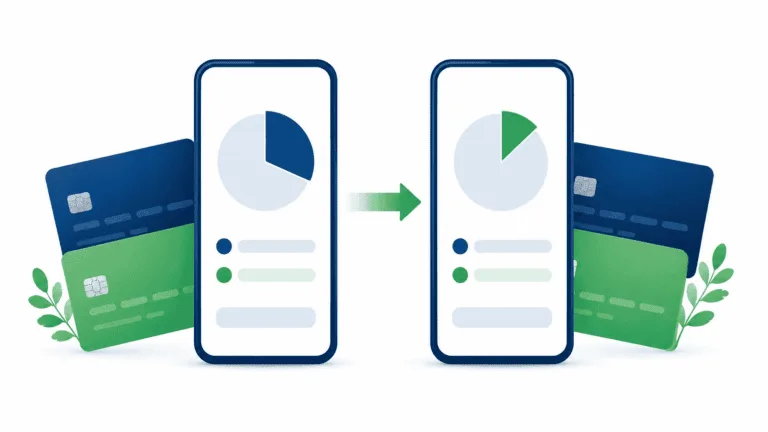
A higher credit limit is one of the fastest, most reliable ways to lower your credit utilization ratio—the percentage of available credit you are using. Because utilization accounts for roughly 30% of your FICO score, raising your limit without increasing your spending can produce a measurable score improvement within a single billing cycle.
But there is a catch. If you request a credit limit increase the wrong way, your card issuer may place a hard inquiry on your credit report. That hard inquiry can temporarily drop your score by a few points and remain visible to lenders for up to two years. For someone on the border of a credit tier, those few points can matter.
The good news is that you do not have to choose between more credit and a stable score. Several major U.S. issuers review accounts for automatic increases using only soft inquiries, and many others will grant requested increases the same way—provided you know how to ask. This article explains exactly how to get a higher limit without triggering a hard pull, which issuers make it easy, and how to position your account so the increase is almost inevitable.
Why a Higher Limit Helps—If You Do Not Spend More
When your credit limit rises and your balance stays the same, your utilization ratio drops instantly. Consider a hypothetical borrower named Dana:
| Scenario | Credit Limit | Balance | Utilization |
|---|---|---|---|
| Before increase | $3,000 | $1,200 | 40% |
| After increase | $6,000 | $1,200 | 20% |
Dana’s actual debt did not change. Her spending habits did not change. But because her available credit doubled, her utilization fell from a level that makes lenders nervous to a level that looks responsible. If Dana had multiple cards, the effect on her overall utilization would be equally positive.
The key is discipline. A higher limit only helps your score if you treat it as a safety net, not as a spending target. If you double your limit and then double your spending, your utilization stays the same and your score does not budge. Worse, you may end up in deeper debt.
For a deeper explanation of how utilization is calculated, including the difference between per-card and overall ratios, see our dedicated credit utilization guide.
Soft Pull vs. Hard Pull: The One Question That Saves Your Score
Before you request a credit limit increase from any issuer, you need to understand the difference between how your credit is reviewed.
A soft inquiry—also called a soft pull—occurs when a company reviews your credit for promotional purposes, account maintenance, or pre-qualification. Soft inquiries do not affect your credit score and are not visible to other lenders.
A hard inquiry—or hard pull—occurs when you actively apply for new credit or request a review that involves a full credit check. Hard inquiries can lower your score by a few points and remain on your report for two years, though their impact fades after about 12 months.
When it comes to credit limit increases, the critical question is: Will this request trigger a hard inquiry or a soft inquiry?
The answer varies by issuer, by how you submit the request, and sometimes by your account history. Some issuers always use soft pulls for requested increases. Others use soft pulls for automatic increases but hard pulls when you ask. A few may give you a choice or warn you before proceeding.
If you are not sure, ask. Before submitting any request, contact customer service and say exactly this: «I am considering requesting a credit limit increase. Will this result in a hard inquiry on my credit report?» If the representative says yes, you can decline and explore other options.
Method 1: Wait for an Automatic Credit Limit Increase
The easiest way to get a higher limit without a hard inquiry is to do nothing at all. Many issuers periodically review accounts for automatic credit limit increases—often called auto-CLIs—and these reviews typically use soft inquiries or no inquiry at all.
Issuers look for consistent patterns of responsible use before granting an auto-CLI. While each bank uses its own algorithm, the common signals include:
- Six to twelve consecutive months of on-time payments. Even one late payment can reset the clock.
- Low utilization on the card in question. Using 80% of your limit every month signals risk, even if you pay it off. Keeping usage under 30%—and ideally under 10%—makes you look like a safer bet.
- Overall credit health. If your credit score has risen since you opened the card, the issuer’s system may flag you for an increase.
- Updated income. Some issuers ask you to update your annual income in your online profile. A higher reported income can trigger an automatic review.
Auto-CLIs are not guaranteed, and the timeline varies. Some borrowers receive an increase after six months. Others wait two years. The increase amount also varies—sometimes it is 10% to 15% of your current limit, and other times it is substantially larger.
If you receive an email, letter, or app notification offering an automatic increase, accept it. These offers are almost always based on soft inquiries and carry no score penalty.
Method 2: Request an Increase From a Soft-Pull Issuer
If you do not want to wait for an automatic increase, you can request one directly. The key is choosing the right issuer and the right method. Several major U.S. card issuers routinely use soft inquiries for credit limit increase requests, meaning you can ask without fear of a score dip.
Here is how the process typically works:
Online or through the mobile app. Log in to your account and look for an option labeled «Request Credit Line Increase» or similar. The system may ask for your current annual income, monthly housing payment, and employment status. If the issuer uses a soft pull, you will usually receive a decision within seconds to a few days.
By phone. If you cannot find the option online, call the customer service number on the back of your card. Ask the representative whether the review will involve a hard inquiry before you authorize the request. If they confirm it is a soft pull, proceed.
The following issuers are widely reported to use soft pulls for most consumer credit limit increase requests, though policies can change:
- American Express — Typically soft pulls for CLI requests, though very large requests may trigger additional review.
- Bank of America — Moved to soft pulls for most CLI requests in recent years.
- Capital One — Uses soft inquiries for requested increases; explicitly states this in its customer materials.
- Citi — Generally soft pulls when requested online or through the app.
- Discover — Usually soft pulls for CLI requests.
- Goldman Sachs (Apple Card) — Soft pulls for credit limit reviews.
- Navy Federal Credit Union — Soft pulls when requested via the website or mobile app; some reports indicate phone requests may be treated differently.
Because issuer policies evolve, always confirm the current policy before submitting your request. A two-minute phone call can save you a hard inquiry.
Method 3: Use the Online Portal or App Before Calling
For some issuers, the method you use to request an increase determines whether a hard or soft pull occurs. Online requests and mobile app submissions are more likely to be automated and therefore more likely to use soft inquiries. Phone requests, which involve a human representative, may be routed through a different system that defaults to a hard pull.
This pattern has been reported particularly with:
- Chase — Does not currently offer online credit limit increase requests for most cards. You must call, and phone requests may result in a hard inquiry. If you are a Chase cardholder, weigh the benefit of the increase against the certainty of a hard pull.
- Navy Federal Credit Union — App and website requests are typically soft pulls, while phone inquiries may not be.
If your issuer offers an online request option, start there. If the online system denies you or does not offer the option, then consider calling—but only after asking about the inquiry type.
Major Issuer Policies: Who Soft Pulls and Who Might Hard Pull
The table below summarizes current practices for major U.S. issuers. Treat this as a starting point, not a guarantee, because policies change and individual accounts may be reviewed differently.
| Issuer | Typical CLI Request Method | Inquiry Type | Notes |
|---|---|---|---|
| American Express | Online / App / Phone | Soft pull | Large requests may trigger review |
| Bank of America | Online / App / Phone | Soft pull | Policy shifted in recent years |
| Capital One | Online / App | Soft pull | Confirmed by issuer |
| Chase | Phone only | May be hard pull | No online option for most cards |
| Citi | Online / App | Soft pull | Phone may vary |
| Discover | Online / App | Soft pull | Frequent small increases possible |
| Goldman Sachs (Apple Card) | iPhone Wallet app | Soft pull | Integrated into Apple ecosystem |
| Navy Federal CU | Online / App | Soft pull | Phone requests may differ |
| Wells Fargo | Online / Phone | Soft or hard | May ask if you accept a hard pull for larger limits |
If an issuer offers you a choice—We can review you with a soft pull for a smaller increase or a hard pull for a larger one—consider whether the larger limit is worth the temporary score impact. For most borrowers, accepting the soft-pull amount and waiting six months to ask again is the safer path.
How to Prepare Your Account Before Requesting
Whether you are waiting for an automatic increase or planning to request one, these steps improve your odds of approval:
Update your income. Log in to your online account and make sure your annual income is current. If you received a raise, started a side business with documented earnings, or your household income increased, enter the new figure. Issuers use this data to determine whether you can support a higher limit.
Pay down balances before requesting. If your current utilization on the card is above 30%, pay it down before asking. Some issuers review your current balance as part of the decision. A low or zero balance signals that you are not desperate for credit.
Wait at least six months from account opening. Most issuers will not consider a CLI on a brand-new account. Six months is the minimum; twelve months is safer.
Space out your requests. Even soft-pull requests create a record of activity. If you were denied an increase last month, wait three to six months before asking again. Use that time to improve the factors that led to the denial.
Avoid requesting during financial stress. If you recently lost your job, opened several new accounts, or missed a payment on any card, wait. These red flags reduce approval odds and may push the issuer toward a more invasive review.
What to Do If the Issuer Says It Requires a Hard Pull
If your issuer informs you that a requested increase will trigger a hard inquiry, you have three options:
Option 1: Decline and wait. If your score is borderline or you plan to apply for a mortgage or car loan within the next six months, the safest choice is to say no. A few points from a hard inquiry can shift you into a higher interest rate tier or trigger additional scrutiny from an underwriter.
Option 2: Accept the hard pull strategically. If your credit is strong, your report is clean, and you have no major loan applications on the horizon, a single hard inquiry is unlikely to cause lasting damage. The long-term benefit of a higher limit—lower utilization, better score trajectory—may outweigh the short-term cost.
Option 3: Open a new card instead. If your issuer insists on a hard pull and you are willing to accept one anyway, consider whether opening a new card with a different issuer makes more sense. A new card adds to your total available credit and may come with a sign-up bonus. However, it also reduces your average age of accounts and adds a new hard inquiry. This trade-off is only worthwhile if the new card offers clear advantages beyond the limit increase.
Common Mistakes That Get You Denied—or Dinged
Even borrowers with good credit sabotage their CLI requests by making these errors:
Requesting too frequently. Some borrowers ask every month, hoping persistence pays off. It does not. Frequent requests signal desperation and may lead to account review or denial. Wait at least six months between requests.
Maxing out the card before asking. If your current balance is near your limit, the issuer sees risk, not responsibility. Pay the card down first.
Ignoring the income update prompt. Many issuers periodically ask you to confirm or update your income through email or app notifications. Ignoring these means the issuer evaluates you based on outdated, lower income figures.
Assuming all issuers behave the same way. Just because Capital One uses soft pulls does not mean Chase does. Research your specific issuer before every request.
Accepting a hard pull without asking first. Never authorize a CLI review until you have explicitly asked the representative whether it will result in a hard inquiry. If they hedge or say they are not sure, ask to speak with a supervisor or decline the review.
FAQ: Credit Limit Increases Without Hard Inquiries
Will a credit limit increase request always hurt my credit score?
No. If the issuer uses a soft inquiry, the request has no impact on your score. If the issuer uses a hard inquiry, you may see a temporary drop of a few points. The long-term benefit of lower utilization often outweighs the short-term cost of a single hard inquiry, but if you can avoid the hard pull entirely, that is the better path.
How often should I request a credit limit increase?
As a general rule, wait at least six months between requests with the same issuer. Some issuers have their own internal cooldown periods. Requesting too frequently can lead to denial and may flag your account for manual review.
Can I get a credit limit increase if I have bad credit?
It is more difficult, but not impossible. If your score is below 600, focus on secured cards or cards designed for building credit. Some issuers offer graduation paths from secured to unsecured status, which effectively functions as a credit limit increase without a new application. Once your score improves, CLI requests become more viable.
Do automatic credit limit increases happen without me asking?
Yes. Many issuers review accounts periodically and grant automatic increases to cardholders who demonstrate responsible use. These reviews typically use soft inquiries or no inquiry at all. You are most likely to receive an auto-CLI after six to twelve months of on-time payments and low utilization.
What if my issuer denies my request?
If you are denied, the issuer is required to provide a reason—often by mail within seven to ten days. Common reasons include insufficient account history, high utilization, recent late payments, or low income relative to your current limits. Address the stated reason, wait three to six months, and try again.
Does a higher credit limit mean I should spend more?
Absolutely not. A higher limit is a tool for improving your utilization ratio and providing emergency flexibility, not an invitation to increase your spending. If you raise your spending to match the new limit, your utilization stays the same and your score does not improve.
Conclusion
A credit limit increase is one of the most efficient, low-risk ways to improve your credit profile—provided you obtain it without a hard inquiry. By understanding which issuers use soft pulls, preparing your account with updated income and low balances, and timing your requests strategically, you can expand your available credit without sacrificing a single point from your score.
Automatic increases are the safest route because they require no action and no inquiry. When patience runs thin, direct requests to soft-pull issuers like Capital One, Discover, American Express, Citi, and Bank of America offer a reliable alternative. For issuers that may require a hard pull, the decision becomes a cost-benefit analysis: is the long-term utilization improvement worth a temporary score dip?
The borrowers who benefit most from higher limits are the ones who never needed the extra spending room in the first place. If you treat a higher limit as a score-building tool rather than a license to spend, your credit profile will strengthen month after month.
Your Action Plan for TODAY
- Log in to every credit card account and update your annual income to reflect current earnings. This alone can trigger automatic review at some issuers.
- Check your current utilization on each card. If any card is above 30%, pay it down before requesting an increase.
- Identify which of your issuers use soft pulls for CLI requests. Call customer service for any issuer you are unsure about and ask directly.
- Submit one soft-pull CLI request through the issuer’s online portal or mobile app if your account is at least six months old and your payment history is clean.
- Set a calendar reminder to review your accounts again in six months. If you were denied or waiting for an automatic increase, that is your next window.
Related Guides
- Credit Utilization Ratio Calculator & Guide
- Hard Inquiry vs. Soft Inquiry
- Best Credit Cards for a 600 Credit Score
- How to Build Credit From Zero: A Complete Guide for No Credit History in 2026
Disclaimer
This content is for educational and informational purposes only and does not constitute personalized financial, tax, or legal advice. Credit card issuer policies regarding credit limit increases, inquiry types, and approval criteria may change at any time and vary by product and individual account history. The information regarding soft pulls and hard pulls reflects general industry practices as of the date of publication and may not apply to your specific situation. Readers should verify current policies directly with their card issuers before requesting a credit limit increase.
Sources & References
- Capital One. «How to Increase Your Credit Limit.» capitalone.com.
- Capital One. «Does increasing your credit limit hurt credit scores?» capitalone.com.
- Chase. «Do Credit Limit Increases Hurt Your Score?» chase.com.
- Chase. «Frequently Asked Questions about Credit Limit Increases.» chase.com.
- Bankrate. «How requesting a credit limit increase affects your credit.» bankrate.com.
- U.S. Bank. «How to increase your credit limit.» usbank.com.
- Equifax. «What to Expect When Asking for a Credit Limit Increase.» equifax.com.
- CardRates. «3 Tips: Credit Card Limit Increases Without Asking.» cardrates.com.
- myFICO Forums. «Best Soft Pull Credit Limit Increase Credit Cards.» myfico.com.
- Reddit r/CreditCards. «Credit Limit Increase—Which Banks Soft Pull.» reddit.com.


Un comentario