Written by Credit Builder Guide Editorial Team
Credit Builder Guide is dedicated to helping Americans understand credit scores, improve financial habits, rebuild damaged credit, and make smarter borrowing decisions through simple, research-based educational content.
Fact-checked using trusted U.S. financial resources • Updated for 2026
Search «how to improve my credit score» and it won’t take long to find advice suggesting that opening a loan you don’t need will boost your score because it improves your «credit mix.» That advice is incomplete, and for some readers it can lead to taking on debt for the wrong reasons.
Credit mix is a real factor in most scoring models, but it’s also one of the smallest and most misunderstood. This guide explains what credit mix actually means, how much it really matters, and what a healthy mix looks like in practice — without suggesting readers borrow money they don’t need.
What Credit Mix Actually Means
Credit mix refers to the variety of account types that appear on a credit report. Scoring models look at whether a person has experience managing different kinds of credit responsibly, rather than relying on just one type of account.
In practice, credit mix is generally broken into two broad categories: revolving credit and installment credit. A credit file that includes both types, managed responsibly, is generally viewed more favorably than a file with only one type — but the effect is modest compared to factors like payment history and credit utilization.
How Much Credit Mix Really Affects Your Score
In the FICO scoring model, credit mix is typically described as accounting for about 10% of the score, making it one of the smaller factors compared to payment history and amounts owed. VantageScore uses a somewhat different weighting approach, but credit mix still plays a comparatively minor role there as well.
This matters because it puts credit mix in perspective. A missed payment or high utilization on an existing account will typically have a far larger impact on a score than the absence of a second account type. Readers who are still building basic habits like on-time payments and low utilization generally get a better return on their effort by focusing there first.
Revolving Credit vs Installment Credit
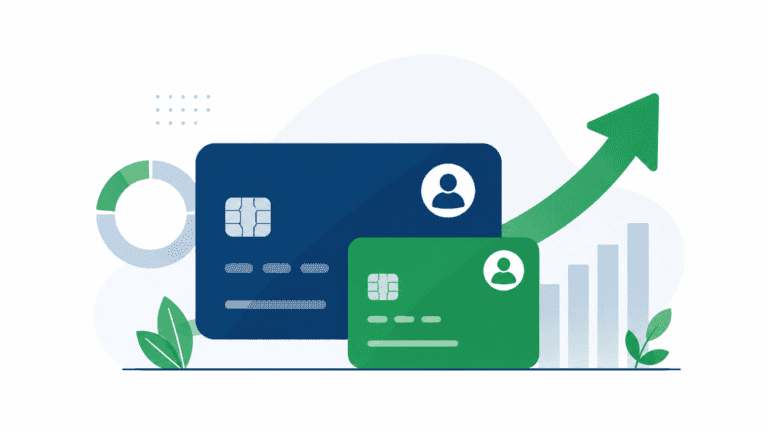
Revolving credit includes accounts like credit cards and lines of credit, where the borrower has an ongoing credit limit and can carry a balance from month to month, as long as at least the minimum payment is made. The amount owed can go up or down, and there’s no fixed end date to the account.
Installment credit includes loans with a fixed repayment schedule, such as auto loans, student loans, personal loans, mortgages, and credit-builder loans. The borrower agrees to a set number of payments over a defined period, and the account typically closes once the loan is paid off.
A credit file that includes only revolving accounts, or only installment accounts, isn’t necessarily unhealthy — it just means the credit mix factor isn’t contributing as much as it could to the overall score.
The Main Types of Credit Accounts
Here’s a breakdown of the account types that typically make up a person’s credit mix:
| Account Type | Category | Common Examples |
|---|---|---|
| Credit cards | Revolving | Rewards cards, secured cards, store cards |
| Lines of credit | Revolving | Personal line of credit, HELOC |
| Auto loans | Installment | New or used car financing |
| Student loans | Installment | Federal and private student loans |
| Personal loans | Installment | Debt consolidation loans, credit-builder loans |
| Mortgages | Installment | Home purchase or refinance loans |
Most people naturally end up with a mix of these over time — a credit card in their early credit-building years, followed later by an auto loan, student loans, or eventually a mortgage.
Do You Need a Loan Just to Improve Your Credit Mix?
Generally, no. Taking on debt solely to diversify a credit mix is rarely a good trade-off, especially if the loan carries interest costs or fees that outweigh the modest scoring benefit.
Consider a hypothetical example: someone with a single credit card, paid on time and kept at low utilization, decides to take out a $2,000 personal loan purely to «improve their mix.» They now owe interest on money they didn’t actually need, in exchange for a small potential boost to roughly 10% of their score. In most cases, that trade doesn’t make financial sense.
Credit mix tends to improve naturally over time as life events call for different types of credit — a car purchase, a home purchase, or, for many people, a student loan. It’s generally better treated as something that develops naturally rather than something to engineer artificially.
How to Build a Healthy Credit Mix Naturally
- Start with a revolving account, such as a secured or student credit card, if you’re building credit from scratch.
- Let installment credit happen when it’s genuinely needed — for example, when financing a car or paying for education.
- Consider a credit-builder loan if you specifically want installment history and don’t currently have a major purchase planned, since these are designed for building credit rather than borrowing a large sum.
- Avoid opening new accounts back-to-back just to diversify — spacing out new credit reduces the impact of hard inquiries and keeps average account age healthier.
Common Mistakes People Make With Credit Mix
- Overestimating its importance. Credit mix is a smaller factor than payment history or utilization, and treating it as a top priority can lead to unnecessary borrowing.
- Opening a loan with no real purpose. As covered above, this usually isn’t worth the cost.
- Assuming a thin file with only one account type is «bad» credit. It’s simply an incomplete file — not necessarily a low or damaged one.
- Ignoring the debt itself once it’s opened. A loan taken on to diversify credit mix still needs to be paid on time, or it can do more harm than the diversification helps.
FAQ: Credit Mix
How many types of credit do I need for a good score?
There’s no fixed number. Having at least one revolving account and one installment account, both managed responsibly, is generally enough to capture most of the benefit this factor offers.
Does closing an account hurt my credit mix?
It can, if closing the account removes one of the only accounts of that type from your active file, but the effect on credit mix specifically is usually smaller than other effects, like a shorter average account age.
Is a credit-builder loan a good way to add installment credit?
It can be, especially for someone who otherwise only has credit cards and doesn’t have another installment loan on the horizon. It adds installment history in a structured, relatively low-risk way.
Does credit mix matter more for a thin credit file?
The overall percentage weighting doesn’t change, but for someone with very few accounts overall, each account — including its type — makes up a larger share of the total picture on the report.
Should I prioritize credit mix over paying down debt?
No. Paying down high balances and maintaining on-time payments should almost always come first, since those factors carry significantly more weight in most scoring models.
Conclusion
Credit mix is a real, measurable factor in most credit scoring models, but it’s also one of the smaller pieces of the puzzle. Understanding the difference between revolving and installment credit helps put the concept in context — and helps readers avoid the common trap of opening unnecessary debt just to chase a marginal scoring benefit. For most people, a healthy credit mix develops naturally over time, as long as the fundamentals — on-time payments and low utilization — stay in place.
Your Action Plan for TODAY
- Pull your credit report and identify which account types you currently have.
- Note whether your file leans entirely revolving, entirely installment, or already has both.
- If you’re missing installment history and want it, research whether a credit-builder loan fits your situation.
- Avoid opening any new account solely for the purpose of «improving your mix.»
- Focus your immediate effort on payment history and utilization before worrying about mix.
Related Guides
- How to Build Credit from Zero: A Complete Guide for No Credit History in 2026
- Credit Builder Loan: What It Is and How It Works in 2026
- Credit Utilization Ratio Calculator: Guide 2026
Disclaimer
This article is for educational and informational purposes only and does not constitute personalized financial advice. Credit scoring models and their weighting of individual factors may change over time and can vary between models. Individual results depend on personal financial circumstances. Readers should verify current information with official credit bureau or scoring model resources, or consult a qualified financial professional before making borrowing decisions.
Sources & References
- FICO — myfico.com
- Consumer Financial Protection Bureau (CFPB) — consumerfinance.gov
- Experian, Equifax, and TransUnion consumer education resources