Written by Credit Builder Guide Editorial Team
Credit Builder Guide is dedicated to helping Americans understand credit scores, improve financial habits, rebuild damaged credit, and make smarter borrowing decisions through simple, research-based educational content.
Fact-checked using trusted U.S. financial resources • Updated for 2026
Meta description: Discover the proven 6-month strategy to boost your credit score from 500 to 700 in 2026. Real steps, no gimmicks. Start rebuilding your credit today.
Introduction: The Credit Score Secret Most People Miss
Imagine waking up six months from now—October 2026—logging into your Credit Karma app, and seeing a 700 credit score staring back at you. Sounds impossible? It’s not. But here’s what most «credit repair gurus» won’t tell you: the system is designed to help people who understand the rules.
In early 2026, I watched my cousin Maria go from a 498 credit score—denied for every apartment she applied to—to a 712. She didn’t hire an expensive credit repair company. She didn’t dispute legitimate debts. She simply followed a structured, month-by-month plan that leveraged how credit scoring actually works.
The truth? Your credit score is just a math problem. And once you know the formula, improving it becomes predictable.
In this guide, I’ll show you the exact 6-month roadmap to build your credit from 500 to 700. No fluff, no illegal tricks, just proven strategies that work in 2026.
What Does a 500 Credit Score Actually Mean?
Before we fix it, let’s understand what you’re working with.
A 500 credit score falls into the «poor» category according to FICO:
| Credit Score Range | Category | Approval Odds |
|---|---|---|
| 300-579 | Poor | Very difficult |
| 580-669 | Fair | Limited options |
| 670-739 | Good | Most approvals |
| 740-799 | Very Good | Best rates |
| 800+ | Exceptional | Premium offers |
At 500, you’re facing:
- Credit card denials or sky-high APR (25-30%)
- Apartment rental rejections
- Higher insurance premiums
- Security deposits for utilities
- Limited loan options
But here’s the good news: Moving from 500 to 700 is easier than moving from 700 to 750. The lower your score, the more «low-hanging fruit» exists to improve it quickly.
The 5 Factors That Control Your Credit Score
Understanding these is crucial. Here’s how FICO weights them:
| Factor | Weight | What It Means |
|---|---|---|
| Payment History | 35% | Do you pay on time? |
| Credit Utilization | 30% | How much credit do you use vs. available? |
| Length of Credit History | 15% | How old are your accounts? |
| Credit Mix | 10% | Do you have different types of credit? |
| New Credit Inquiries | 10% | How many recent applications? |
At 500, you’re likely failing at: Payment History (late payments) and Credit Utilization (maxed cards).
The fix? We’ll attack these two factors aggressively in the first 3 months.
Month 1-2: Foundation & Quick Wins
Step 1: Get Your Credit Reports (Free)
Before doing anything, know exactly what’s hurting you.
- Visit AnnualCreditReport.com (official, free, no credit card required)
- Request reports from Equifax, Experian, and TransUnion
- Look for: errors, collections, late payments, high balances
Pro tip: 1 in 5 credit reports contains errors. If you find any, dispute them immediately through the credit bureau’s website.
Step 2: Pay Down Credit Card Balances (Critical!)
Credit utilization is 30% of your score. At 500, you might be using 80-100% of your limit.
The magic number: Get every card below 30% utilization. Below 10% is even better.
| Current Balance | Credit Limit | Utilization | Action |
|---|---|---|---|
| $800 | $1,000 | 80% | Pay $500 → 30% |
| $950 | $1,000 | 95% | Pay $850 → 10% |
| $500 | $500 | 100% | Pay $450 → 10% |
Can’t pay it all down? Try the «AZEO method»: Pay all cards to $0 except one, which you leave at 1-9%.
Step 3: Set Up Automatic Payments
Payment history is 35% of your score. One late payment can drop you 50+ points.
- Set up auto-pay for at least the minimum payment on every account
- Schedule payments 5 days before the due date
- Add calendar reminders as backup
Month 3: Add Positive Credit History
Step 4: Get a Secured Credit Card
If you can’t get approved for a regular card, a secured credit card is your best friend.
How it works: You deposit $200-$500, and that becomes your credit limit. Use it like a normal card, pay it off monthly, and the issuer reports positive history to credit bureaus.
| Card | Minimum Deposit | Annual Fee | Reports To |
|---|---|---|---|
| Discover it® Secured | $200 | $0 | All 3 bureaus |
| Capital One Platinum Secured | $49-$200 | $0 | All 3 bureaus |
| OpenSky® Secured Visa | $200 | $35 | All 3 bureaus |
Our recommendation: Discover it® Secured. No annual fee, cash back rewards, and graduates to unsecured after 7-8 months of responsible use.
Rules for success:
- Use it for small purchases only (gas, groceries)
- Pay in full every month
- Never exceed 10% of the limit
Step 5: Become an Authorized User (Optional Boost)
Ask a family member with excellent credit (750+) to add you as an authorized user on their oldest credit card.
What happens: Their positive payment history and credit limit appear on your report—sometimes boosting your score 30-50 points instantly.
Important: Choose someone who:
- Has perfect payment history
- Keeps balances below 10%
- Won’t remove you later (that hurts)
Month 4: Optimize & Negotiate
Step 6: Negotiate Collections (If Applicable)
If you have collections on your report, you have leverage.
The «pay for delete» strategy:
- Call the collection agency
- Offer to pay 30-50% of the balance
- Request a «pay for delete» letter in writing before paying
- Pay only after receiving written confirmation
- Follow up to ensure deletion from your report
Warning: Paid collections still hurt your score unless deleted. Always negotiate deletion, not just «paid» status.
Step 7: Request Credit Limit Increases
Higher limits = lower utilization = higher score.
Call your card issuers and ask:
- «I’ve been a responsible customer. Can you increase my credit limit?»
- Some do this without a hard inquiry (ask first!)
Example impact:
| Limit Before | Limit After | Balance | Utilization Before | Utilization After |
|---|---|---|---|---|
| $1,000 | $3,000 | $300 | 30% | 10% |
Month 5: Diversify Your Credit Mix
Step 8: Consider a Credit Builder Loan
Credit unions and online lenders offer credit builder loans specifically designed to improve scores.
How it works:
- You «borrow» $500-$1,000 (but don’t receive the money)
- The lender holds it in a savings account
- You make monthly payments
- At the end, you get the money back + improved credit
| Lender | Loan Amount | Interest | Reports To |
|---|---|---|---|
| Self | $520-$1,663 | 15-16% APR | All 3 bureaus |
| Credit Strong | $1,000-$10,000 | Varies | All 3 bureaus |
Best for: People with no installment credit history (auto loans, mortgages, etc.)
Month 6: Final Push & Monitoring
Step 9: Check Your Progress
By month 6 (October 2026), you should see significant improvement. Verify by:
- Pulling updated credit reports (free at AnnualCreditReport.com)
- Checking Credit Karma or Experian (free monitoring)
- Reviewing your FICO score if available
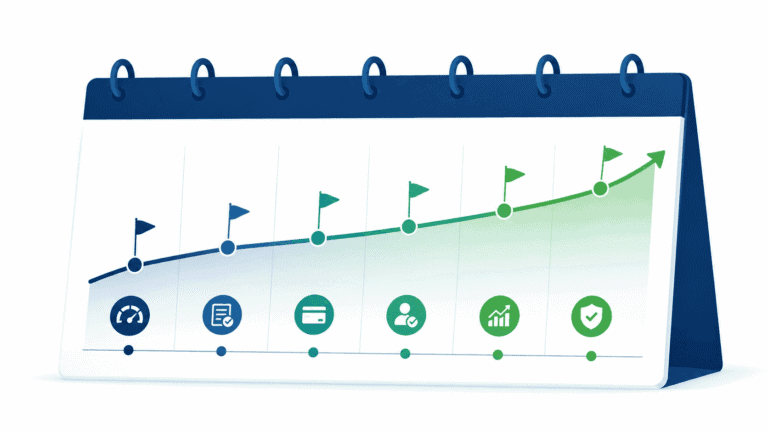
Expected results timeline:
| Month | Expected Score Range | Key Milestone |
|---|---|---|
| 1 (May 2026) | 500-530 | Baseline set, errors disputed |
| 2 (June 2026) | 530-580 | Utilization lowered, auto-pay active |
| 3 (July 2026) | 580-630 | Secured card reporting positive history |
| 4 (August 2026) | 630-660 | Collections resolved, limits increased |
| 5 (September 2026) | 660-690 | Credit mix diversified |
| 6 (October 2026) | 690-720+ | Target reached! |
Step 10: Lock In Good Habits Forever
Reaching 700 is great. Staying there is the real challenge.
Golden rules moving forward:
- Never miss a payment (set 3 reminders if needed)
- Keep utilization under 10% (set balance alerts)
- Don’t close old accounts (hurts credit history length)
- Limit new applications (1-2 per year max)
- Monitor monthly (free apps: Credit Karma, Experian)
Frequently Asked Questions (FAQ)
How fast can I realistically improve my credit score?
Most people see 50-100 point improvements in 3-6 months following this plan. The first 2 months show the fastest gains because you’re fixing the biggest negatives (high utilization, late payments).
Will paying off collections remove them from my report?
Not automatically. Paid collections stay for 7 years unless you negotiate a «pay for delete» agreement. Always get deletion in writing before paying.
Can I build credit without a credit card?
Yes, but it’s slower. Options include credit builder loans, authorized user status, and Experian Boost (reports utility payments). However, having at least one credit card accelerates improvement significantly.
Does checking my own credit hurt my score?
No. Soft inquiries (checking your own score) have zero impact. Only hard inquiries (applying for new credit) temporarily lower your score by 5-10 points.
What’s the minimum credit score to rent an apartment?
Most landlords require 620-650+, though some accept 580 with higher deposits. By month 4-5 of this plan, you should qualify for most rentals.
Should I hire a credit repair company?
Generally no. Most charge $100+/month for things you can do yourself (disputing errors, negotiating collections). The strategies in this guide are the same ones they use.
Conclusion: Your 700 Credit Score Starts Today
Six months from now—October 2026—you could be apartment hunting without stress, qualifying for better credit cards, or refinancing that auto loan to save thousands.
The difference between people who stay at 500 and those who reach 700 isn’t luck—it’s a system.
Your action plan for TODAY:
- ✅ Pull your free credit reports
- ✅ List all your credit card balances
- ✅ Set up automatic payments
- ✅ Research secured credit cards
Remember: Every point you gain opens new doors. A 700 credit score isn’t just a number—it’s financial freedom.
Related guides:
- Credit Utilization Ratio Calculator & Guide (2026)
- How Long Does It Take to Rebuild Credit in 2026?
- Secured Credit Card vs Prepaid Card: Which Actually Builds Credit?
Disclaimer: This content is for educational purposes only and does not constitute financial advice. Individual results may vary. Consult a certified financial advisor before making significant financial decisions.



3 comentarios