Meta Description:
Learn what debt-to-income ratio means, how to calculate your DTI step by step, what lenders consider a good ratio, and how to improve it before applying for a loan.
Written by Credit Builder Guide Editorial Team
Credit Builder Guide is dedicated to helping Americans understand credit scores, improve financial habits, rebuild damaged credit, and make smarter borrowing decisions through simple, research-based educational content.
Fact-checked using trusted U.S. financial resources • Updated for 2026
What Is Debt-to-Income Ratio?
Imagine you earn $5,000 per month before taxes. Between your car payment, student loans, credit card minimums, and a potential mortgage, your monthly debt obligations add up to $2,250. That means 45% of your gross income is already committed to debt payments. That percentage—45%—is your debt-to-income ratio, commonly called DTI.
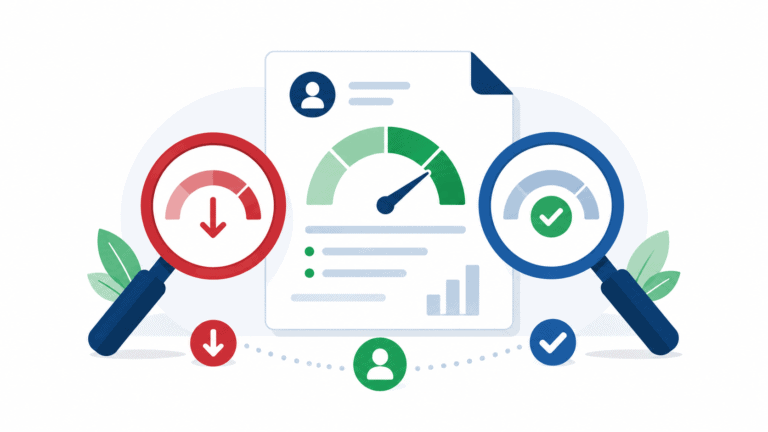
Your DTI is one of the most important numbers a lender will evaluate when you apply for a mortgage, car loan, personal loan, or even a premium credit card. Unlike your credit score, which measures how reliably you have managed debt in the past, your DTI measures whether you can realistically afford to take on new debt today.
Lenders use DTI because it directly answers a practical question: If we approve this loan, will this borrower still have enough income left over for living expenses, emergencies, and the new payment?
A lower DTI suggests you have financial breathing room. A higher DTI signals that you may be stretched thin, which increases the risk of missed payments or default. While DTI does not appear on your credit report and does not affect your credit score, it heavily influences lending decisions—sometimes even more than your score itself.
Front-End DTI vs. Back-End DTI: What’s the Difference?
Not all DTI calculations are the same. When you apply for a loan, especially a mortgage, lenders typically evaluate two versions of your DTI: front-end and back-end. Understanding the difference matters because each one tells a different story about your financial obligations.
Front-End DTI (Housing Ratio)
Front-end DTI measures only your housing-related expenses relative to your gross monthly income. For renters, this is usually just your monthly rent payment. For prospective homeowners, it includes:
- Principal and interest on the mortgage
- Property taxes
- Homeowners insurance
- Homeowners association (HOA) dues, if applicable
- Mortgage insurance premiums (MIP or PMI)
Front-end DTI answers a narrow but important question: How much of your income would go toward keeping a roof over your head?
Back-End DTI (Total Debt Ratio)
Back-end DTI includes your housing expenses plus every other recurring monthly debt obligation that appears on your credit report or loan application. This typically covers:
- Auto loans
- Student loans
- Minimum credit card payments
- Personal loans
- Child support or alimony payments
- Any other installment debts with more than 10 months of payments remaining
Back-end DTI is the number lenders weigh most heavily because it captures your complete financial picture. A borrower might have a reasonable front-end DTI of 28%, but if they also carry $1,200 in car and student loan payments, their back-end DTI could climb to 48%—a level that gives many lenders pause.
How to Calculate Your DTI (Step-by-Step)
Calculating your DTI is straightforward, but accuracy matters. A small error in your monthly debt total or income figure can mislead you about whether you qualify for a loan. Follow these steps carefully.
Step 1: Determine Your Gross Monthly Income
Your gross monthly income is what you earn before taxes, retirement contributions, health insurance premiums, and other deductions. If you are paid biweekly, multiply your gross paycheck by 26 and divide by 12 to get your true monthly average. If you receive bonuses, commissions, or overtime that you can document consistently, you may include them—but lenders usually want to see a two-year history before counting variable income.
Example: Suppose you earn $72,000 per year in salary. Your gross monthly income is $72,000 ÷ 12 = $6,000.
Step 2: Add Up Your Monthly Debt Payments
For back-end DTI, list every recurring monthly debt. Use the minimum payment for credit cards, not the full balance. Use your actual monthly payment for installment loans.
Example debt profile:
| Debt | Monthly Payment |
|---|---|
| Rent | $1,500 |
| Auto loan | $450 |
| Student loan | $350 |
| Credit card minimums | $200 |
| Personal loan | $150 |
| Total monthly debt | $2,650 |
Step 3: Divide and Convert to a Percentage
Divide your total monthly debt by your gross monthly income, then multiply by 100.
Calculation: $2,650 ÷ $6,000 = 0.4417 → 44.2% back-end DTI
To find your front-end DTI, use only your housing payment:
Calculation: $1,500 ÷ $6,000 = 0.25 → 25% front-end DTI
A Note on What Does NOT Count
Lenders do not include everyday living expenses in DTI calculations. The following are typically excluded:
- Utilities (electricity, gas, water)
- Groceries and dining
- Gasoline and transportation
- Car insurance
- Health insurance
- Cell phone bills
- Streaming subscriptions
- Gym memberships
If it is not a formal debt obligation reported to the credit bureaus or required by a legal agreement, it generally does not factor into DTI.
What Is a Good DTI Ratio? Lender Thresholds Explained
There is no universal «perfect» DTI, but lenders use established benchmarks to separate manageable risk from excessive risk. These thresholds vary depending on the type of loan you are seeking.
General Benchmarks
| DTI Range | Assessment |
|---|---|
| 36% or lower | Comfortable; most lenders view this favorably |
| 37% to 43% | Moderate; acceptable for many loans, though some lenders may ask for additional documentation |
| 44% to 49% | Elevated; approval becomes harder and may require strong compensating factors |
| 50% or higher | High risk; many lenders decline or require exceptional circumstances |
Mortgage-Specific Thresholds
Conventional Loans: Most conventional lenders prefer a back-end DTI of 36% or lower, though automated underwriting systems may approve ratios up to 43% to 50% for borrowers with strong credit profiles, significant cash reserves, or larger down payments.
FHA Loans: The Federal Housing Administration sets a benchmark of 31% front-end and 43% back-end DTI. However, FHA’s automated underwriting system, known as TOTAL Scorecard, can approve back-end ratios up to approximately 57% when compensating factors—such as a high credit score, verified cash reserves, or minimal payment shock—are present. Manual underwriting typically caps DTI at 40% front-end and 50% back-end when compensating factors exist.
VA Loans: The Department of Veterans Affairs does not enforce a strict DTI maximum. Instead, VA lenders often use 41% as a guideline while also evaluating residual income—the cash left after paying major debts. Borrowers with strong residual income may qualify with DTIs above 41%.
USDA Loans: Loans backed by the U.S. Department of Agriculture generally target 29% front-end and 41% back-end DTI, with limited flexibility unless the borrower demonstrates significant compensating strengths.
Auto Loans and Credit Cards
Auto lenders typically prefer DTIs below 45% to 50%, though subprime lenders may accept higher ratios with larger down payments or co-signers. Credit card issuers rarely advertise DTI requirements, but premium rewards cards often favor applicants with DTIs under 40%.
Why Lenders Care About Your DTI
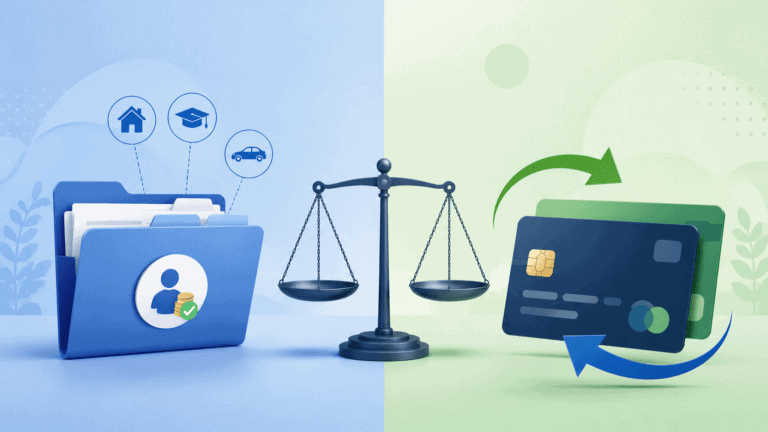
Lenders are in the business of assessing risk. Your credit score tells them how you have behaved with debt in the past. Your DTI tells them whether you have the income to support new debt in the present. Both matter, but they measure different things.
Consider two hypothetical borrowers:
- Borrower A: Has a 750 credit score and a 52% DTI. They have never missed a payment, but more than half their income is already committed to debt.
- Borrower B: Has a 660 credit score and a 32% DTI. Their credit history is shorter, but they have substantial income left over after paying existing obligations.
Many lenders would view Borrower B as the safer bet, despite the lower credit score, because the likelihood of cash flow problems is reduced. A high DTI leaves little room for unexpected expenses—medical bills, car repairs, job loss—and dramatically increases the chance that a borrower will fall behind.
DTI also helps lenders comply with federal ability-to-repay rules. The Consumer Financial Protection Bureau (CFPB) emphasizes that lenders must verify a borrower’s ability to repay a mortgage, and DTI is a core component of that evaluation.
How DTI Affects Different Types of Loans
Your DTI does not carry the same weight across every financial product. Understanding these differences can help you prioritize which debts to pay down before applying.
Mortgages
Mortgage lenders scrutinize DTI more closely than any other loan type because mortgages represent large, long-term commitments. A high DTI can reduce the loan amount you qualify for, trigger a higher interest rate, or result in outright denial. If you are shopping for a home, improving your DTI before pre-approval can expand your purchasing power significantly.
Auto Loans
Auto lenders are generally more flexible than mortgage lenders on DTI, especially if you are financing through a dealership or subprime lender. However, a DTI above 50% may still trigger higher APRs or require a larger down payment. If your DTI is elevated, saving for a bigger down payment can offset lender concerns by reducing the monthly payment and loan amount.
Personal Loans
Unsecured personal loans rely heavily on DTI because there is no collateral for the lender to seize. A DTI below 40% improves your chances of approval and helps you secure a lower interest rate. Above 50%, approval becomes difficult unless you have a strong credit score and stable employment history.
Credit Cards
Credit card issuers evaluate DTI during the application process, even though they do not always disclose specific thresholds. A lower DTI improves your odds of receiving a higher credit limit, which in turn can improve your credit utilization ratio—a separate but related metric.
How to Lower Your DTI Ratio
If your DTI is higher than you would like, the good news is that you can improve it with targeted action. Because DTI is a simple ratio, you have two levers: reduce your monthly debt payments or increase your gross monthly income.
1. Pay Off Small Debts Completely
This is often the fastest way to improve DTI. Paying off a credit card with a $150 minimum payment eliminates that entire obligation from your DTI calculation. By contrast, paying down a $20,000 auto loan by $2,000 does not reduce your monthly payment, so your DTI stays the same until the loan is fully paid off.
Example: On a $6,000 monthly income, every $60 reduction in monthly debt payments lowers your DTI by 1 percentage point. Paying off a small personal loan with a $120 monthly payment drops your DTI by 2 full points.
2. Pay Down Credit Cards Strategically
Credit card minimums count toward DTI. If you can pay a card down to a zero balance, the minimum payment disappears from your ratio. Focus on cards where you can eliminate the balance quickly rather than spreading payments thinly across multiple cards.
3. Avoid Taking on New Debt Before Major Applications
Every new loan or credit card increases your monthly obligations. If you plan to apply for a mortgage within the next 6 to 12 months, avoid financing a car, opening new credit lines, or co-signing loans for others. Co-signed debts count against your DTI even if the other party makes every payment.
4. Increase Your Documented Income
A raise, a documented side income stream with a two-year history, or consistent overtime can lower your DTI by increasing the denominator of the equation. Lenders typically require documentation, so informal cash income that is not reported on tax returns usually does not count.
5. Consider Debt Consolidation Carefully
Consolidating multiple high-payment debts into a single loan with a lower monthly payment can reduce your DTI. However, opening a new consolidation loan before applying for a mortgage may temporarily lower your credit score due to the hard inquiry and new account. Weigh the timing carefully.
6. Choose a More Affordable Home or Vehicle
If you are house hunting or car shopping and your DTI is tight, selecting a lower purchase price reduces your projected monthly payment and immediately improves your front-end and back-end DTI.
Common DTI Calculation Mistakes
Many borrowers miscalculate their DTI and are surprised when a lender arrives at a different number. Avoid these common errors:
Using net income instead of gross income. DTI is always calculated using pre-tax income. Using your take-home pay will make your ratio appear higher than it actually is.
Forgetting the new mortgage or loan payment. When applying for a home or auto loan, borrowers sometimes calculate DTI using only their current debts. You must include the projected new payment to get an accurate back-end ratio.
Including non-debt expenses. Utilities, insurance premiums, groceries, and subscriptions do not belong in a DTI calculation. Only include formal debt obligations.
Ignoring co-signed loans. If you co-signed a loan for a child, parent, or friend, that monthly payment counts toward your DTI unless you can prove the primary borrower has made timely payments for 12 consecutive months and provide documentation from the creditor.
Using the wrong student loan payment. If your student loans are in deferment or on an income-driven repayment plan showing $0, lenders may still assign an estimated payment for DTI purposes. FHA guidelines, for example, typically use 0.5% of the outstanding balance as a monthly payment if no fixed payment is reported.
Overlooking debts with fewer than 10 payments remaining. Some lenders will exclude installment debts with fewer than 10 months left, but others will not. Do not assume a nearly paid-off loan will disappear from your ratio.
FAQ: Debt-to-Income Ratio
Does rent count toward my DTI ratio?
Yes, if you are currently renting, your monthly rent payment is included in your back-end DTI calculation. However, when you apply for a mortgage, lenders assume you will no longer pay rent once you own a home, so they replace your rent with the projected mortgage payment. Your rent history itself does not appear on your credit report, but the payment amount is used in DTI calculations during the application process.
What’s the difference between DTI and credit utilization?
DTI measures your monthly debt payments against your monthly gross income. Credit utilization measures how much of your available revolving credit you are using, expressed as a percentage of your credit limits. DTI affects your loan approval odds but does not impact your credit score. Credit utilization directly influences your credit score but is not part of the DTI formula. Both metrics matter to lenders, but they measure entirely different things.
Can I get a mortgage with a 50% DTI?
It is possible, depending on the loan program and your overall financial profile. FHA loans, through automated underwriting, may approve borrowers with back-end DTIs up to approximately 57% when strong compensating factors are present. Conventional loans are typically stricter, often capping DTI near 43% to 50%. However, individual lender overlays—internal rules stricter than program guidelines—may prevent approval even if you meet the official threshold. Shopping among multiple lenders can help if you are near the boundary.
Do student loans in deferment count toward DTI?
Yes. Even if your student loans are in deferment or forbearance and show a $0 payment on your credit report, lenders usually assign an estimated monthly payment for DTI calculations. Under current FHA guidelines, lenders often use 0.5% of the outstanding loan balance as the assumed monthly payment. Conventional lenders may use 1% or another calculated figure. This is why borrowers with large student loan balances sometimes face unexpectedly high DTI ratios.
How quickly can I improve my DTI?
You can improve your DTI as soon as you eliminate a monthly debt obligation. Paying off a credit card or small loan this month removes that payment from next month’s calculation. Increasing your income generally requires documentation of stability, so it may take months to years for new income to be fully counted by lenders. The fastest path to a lower DTI is usually paying off small, high-payment debts completely.
Does DTI affect my credit score?
No. Your debt-to-income ratio does not appear on your credit report and has no direct impact on your credit score. Credit scoring models like FICO and VantageScore do not use income data at all. However, DTI affects your ability to obtain new credit, and taking on new credit can alter your credit utilization and payment history—factors that do affect your score.
Conclusion
Your debt-to-income ratio is a practical, powerful number that shapes your access to mortgages, auto loans, and other forms of credit. Unlike your credit score, which reflects your past behavior, DTI reveals whether you have the income to support new debt today. Lenders care about DTI because it predicts your ability to repay—not just your willingness.
Understanding the difference between front-end and back-end DTI, knowing how to calculate it accurately, and recognizing lender thresholds for different loan types puts you in a stronger position before you ever submit an application. If your DTI is higher than ideal, targeted debt paydowns, avoiding new obligations, and strategic timing can move you into a more favorable range.
Remember that lending guidelines change, and individual lenders apply their own overlays on top of federal program rules. What one lender declines, another may approve—especially if compensating factors strengthen your file.
Your Action Plan for TODAY
- Calculate your exact DTI. Gather your pay stubs and list every monthly debt payment. Divide your total debts by your gross monthly income to find your current front-end and back-end ratios.
- Identify one debt you can eliminate. Look for a small credit card balance, a personal loan, or any debt with fewer than 10 payments remaining. Paying it off will immediately reduce your DTI.
- Verify your credit reports for accuracy. Pull your free reports from all three bureaus and confirm that every listed debt belongs to you and reflects the correct monthly payment.
- Estimate how a major purchase would affect your DTI. If you are considering a home or car, calculate the projected new payment and add it to your current debts. Know your ratio before you shop.
- Pause new credit applications. If you plan to apply for a mortgage or large loan within the next 6 to 12 months, avoid opening new credit lines or financing additional purchases.
Related Guides
- Credit Utilization Ratio Calculator & Guide
- How to Get Approved for a Car Loan With Bad Credit
- FHA Loan With a Low Credit Score
- What Is a Good Credit Score in 2026?
Disclaimer
This content is for educational and informational purposes only and does not constitute personalized financial, tax, or legal advice. Individual lending decisions depend on factors beyond DTI, including credit history, employment stability, assets, and lender-specific policies. Loan requirements, DTI thresholds, and government program guidelines may change over time. Readers should verify current requirements with lenders, the Consumer Financial Protection Bureau, the U.S. Department of Housing and Urban Development, or qualified mortgage professionals before making financial decisions.
Sources & References
- Consumer Financial Protection Bureau (CFPB). «What is a debt-to-income ratio? Why is the 43% debt-to-income ratio important?» consumerfinance.gov.
- U.S. Department of Housing and Urban Development (HUD). Single Family Housing Policy Handbook 4000.1. hud.gov.
- Federal Housing Administration (FHA). «FHA Debt-to-Income Ratio Requirements.» fha.gov.
- Fannie Mae and Freddie Mac. «Conventional Loan Underwriting Guidelines.» fnma.com and freddiemac.com.
- U.S. Department of Veterans Affairs (VA). «VA Guaranteed Loan: Underwriting Guidelines.» va.gov.
- U.S. Department of Agriculture (USDA). «Single Family Housing Guaranteed Loan Program: Technical Handbook.» rd.usda.gov.
- Bankrate. «Debt to Income Ratio Calculator.» bankrate.com.
- Chase. «FHA Loan Debt-to-Income Ratio (DTI) Requirements.» chase.com.